Why does my house still smell like smoke months after a fire
Smoke smell that lingers months after a fire means odor particles are trapped in porous materials like drywall, insulation, and HVAC ducts. Here is how to get rid of it.
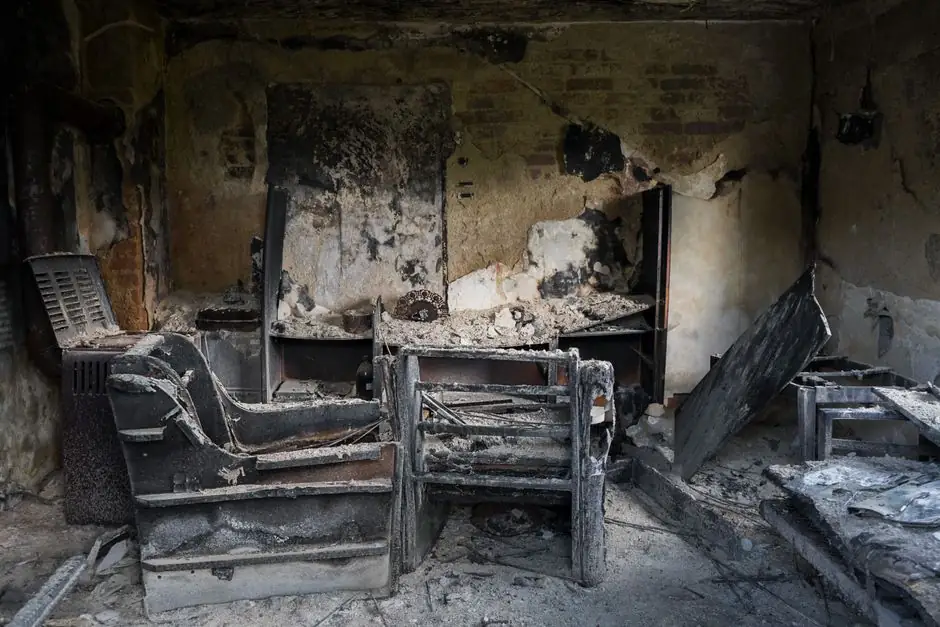
Your house still smells like smoke months after a fire because the odor is not coming from the air - it is coming from soot and smoke residue that soaked into porous materials like drywall, insulation, wood framing, carpet, and your HVAC system. Every time humidity rises or your air conditioner kicks on, those materials release a fresh wave of smoke compounds back into the room. The smell will not fade on its own, and it will not go away with candles, ozone generators, or a fresh coat of paint over dirty walls.
We have walked into West Palm Beach homes six months after a kitchen fire where the homeowner had already repainted twice and replaced the carpet. The smell was still there. This post explains exactly where smoke odor hides, why Florida's climate makes it worse, and what it actually takes to remove it.
Why smoke odor lingers months after a fire
Smoke odor lingers because fire produces thousands of microscopic particles that behave like a gas - they travel through the whole house, not just the room that burned. Those particles are called soot, and they are oily, sticky, and attracted to cool surfaces. They settle on walls, ceilings, cabinet interiors, light fixtures, and inside air ducts. Once they land on a porous surface, they bond to it.
Here is the part most people miss: the smell you notice months later is not the original soot. It is the soot off-gassing. Every time temperature or humidity changes, those bonded particles release volatile organic compounds (VOCs) back into the air. That is why the smell seems to come and go. It is not your imagination - it is chemistry.
Professional Fire and Smoke Odor Removal in west palm beach is the process of finding every reservoir of those particles and either removing them or chemically neutralizing them. Spraying the air does nothing. The source has to be treated.
The hidden reservoirs most homeowners miss
Smoke odor hides in places you would never think to clean. We have pulled apart homes in WPB Fire Damage Restoration in El Cid where the fire was contained to one bedroom, yet the smell had migrated into the attic insulation, the return air plenum, and the back of the kitchen cabinets. Smoke travels through the same pathways air does - under doors, through outlets, up stairwells, and into the HVAC system.
These are the reservoirs we check on every job:
- HVAC ducts and air handler - soot coats the inside of the ductwork and the blower wheel. Every time the system runs, it redistributes the smell.
- Attic and wall insulation - fiberglass and blown-in insulation act like sponges. Once smoke is in there, it stays.
- Drywall and framing - drywall paper is porous. Smoke soaks through the paper and into the gypsum. Painting over it traps the smell under the paint, which then bleeds through.
- Carpet and padding - the pad is almost impossible to clean. It has to be removed.
- Cabinet interiors and drawers - smoke settles on the inside of cabinets, especially upper cabinets near the ceiling.
- Light fixtures and ceiling fans - heat pulls smoke upward, and it condenses on anything metal or glass up there.
- Furniture upholstery and mattresses - these are porous and often have to be packed out for specialized cleaning.
If a restoration company only cleaned the room that burned, the smell was always going to come back. The job has to address the whole house.
How West Palm Beach humidity makes smoke smell worse
West Palm Beach humidity makes smoke smell worse because moisture reactivates dried soot and pulls VOCs back into the air. Our average relative humidity sits between 70% and 80% for most of the year. That is a problem for smoke odor.
In dry climates like Arizona, soot dries out and the smell fades faster. Here, the air is almost always holding water. That water gets into the same porous materials the soot is in, and the chemical reaction that releases odor compounds never fully stops. We see this most in homes east of Dixie Highway, where the ocean breeze keeps humidity high year-round.
It gets worse in summer. From June through September, your air conditioner runs constantly. If the ducts and air handler were not cleaned after the fire, you are running smoke-contaminated air through every room in the house, eight to twelve hours a day. That is why so many homeowners tell us the smell got worse in July even though the fire was in January.
Mold is the other issue. Smoke residue plus humidity plus a slow leak from firefighting water equals mold growth inside walls. We handle that with Mold Remediation After Fire Damage in west palm beach, but it is far cheaper to prevent it than to fix it later.
What actually removes smoke odor for good
Removing smoke odor for good requires three things in order: source removal, surface cleaning, and air treatment. Skip any step and the smell comes back.
Step 1: Source removal
This means physically removing the materials that cannot be cleaned. Carpet and pad come out. Insulation in the affected cavities comes out. If drywall is heavily contaminated, we cut it out and replace it. This is not optional - no amount of chemical treatment will neutralize a smoke-soaked carpet pad.
Step 2: Surface cleaning
Every cleanable surface gets treated. Walls, ceilings, framing, cabinet interiors, light fixtures, and ductwork. We use chemical sponges for soot on flat surfaces, then a restoration-specific cleaner for the residue that is bonded to the surface. This is where soot removal and cleaning west palm beach FL does the heavy lifting. If the soot is not removed, the smell is not removed.
Step 3: Air treatment
After the surfaces are clean, we treat the air and the voids. That means HEPA air scrubbers running during the job, thermal fogging to reach cavities that cannot be wiped down, and hydroxyl or ozone treatment for the final pass. We also clean the HVAC system - ducts, blower, and coil - because otherwise you are re-contaminating the house every time the AC runs.
Typical 2026 pricing in West Palm Beach for whole-house smoke odor removal runs $2,800 to $7,500 depending on square footage, how many rooms were affected, and whether duct cleaning and insulation replacement are needed. A single-room job with no HVAC involvement can be as low as $1,200. If a contractor quotes you $400 to "ozone the house and call it a day," that is not a real fix.
Common mistakes that keep the smell alive
We get called to fix other companies' work more often than you would think. These are the mistakes that keep smoke smell alive in a house that has already been "restored."
- Painting over soot. Paint seals the surface, but the soot underneath keeps off-gassing. The smell bleeds through in three to six months. You have to clean first, then seal with a shellac-based primer, then paint.
- Replacing carpet without sealing the subfloor. The subfloor absorbed smoke too. New carpet goes down over a contaminated subfloor and picks the smell right back up.
- Skipping the HVAC system. This is the single most common reason smoke smell returns. The ducts are full of soot and nobody cleaned them.
- Using ozone alone. Ozone treats the air, not the surfaces. It is a finishing step, not a standalone fix.
- Not replacing attic insulation. If smoke got into the attic, the insulation is contaminated. Blown-in insulation cannot be cleaned - it has to be removed and replaced.
- Leaving furniture and mattresses in the house. Upholstery and mattresses hold odor. They need to be packed out and cleaned off-site, or replaced.
If you are dealing with a commercial space instead of a home, the same rules apply but the scale is larger. We handle commercial fire damage restoration west palm beach FL for restaurants, retail, and offices, and the biggest mistake we see there is reopening before the HVAC and kitchen hood systems have been cleaned.
When to call a professional
Call a professional if the smell has lasted more than two weeks after the fire, if it gets stronger when the AC runs, or if you can still smell it in rooms that were not damaged. Those are all signs that smoke migrated into the structure and the HVAC system.
You also need a pro if you are seeing any of these:
- Visible soot on walls, ceilings, or cabinet interiors that you cannot wipe off
- Discoloration on drywall that keeps coming back after cleaning
- Headaches, coughing, or eye irritation when you are inside the house
- A musty smell underneath the smoke smell - that is likely mold
- Insurance adjuster asking for a documented scope of work
We handle the whole process: assessment, soot and odor removal, HVAC cleaning, and reconstruction. If your insurance company needs documentation, we provide it. We work directly with most major carriers and can help you file the claim correctly the first time.
Frequently Asked Questions
How long does smoke smell last after a fire?
Smoke smell lasts two to four weeks if the affected materials are properly cleaned and the HVAC system is treated. If the source materials are not removed, the smell can last indefinitely - we have seen it persist for two years in homes where only the burned room was cleaned.
Does painting over smoke smell work?
No. Painting over soot traps the odor under the paint, and it bleeds back through within three to six months. You have to clean the soot off first, seal with a shellac-based primer, then paint. Skipping the cleaning step is the most common reason smoke smell returns after a remodel.
Will an ozone generator get rid of smoke smell?
Ozone treats the air, not the surfaces. It helps as a final step after all soot and contaminated materials have been removed, but on its own it will not fix the problem. If a company only runs an ozone machine and leaves, the smell will come back within weeks.
Why does my house smell like smoke when the AC turns on?
Because the HVAC ducts, blower wheel, and evaporator coil are coated with soot. Every time the system runs, it blows that soot-contaminated air through the house. Duct cleaning and air handler cleaning are required to fix this - it will not resolve on its own.
Does homeowners insurance cover smoke odor removal?
Yes, in most cases. Standard Florida homeowners policies cover smoke damage and the odor removal that follows, as long as the fire was a covered peril. We document the scope, photograph the affected materials, and work directly with your adjuster so the claim includes HVAC cleaning and insulation replacement when needed.
Get help with WPB Fire Damage Restoration in west palm beach
If your house still smells like smoke months after a fire, the source is still in the building. We find it, remove it, and verify the air is clean before we pack up. Call WPB Fire Damage Restoration at +1 (561) 562-7610 for a same-day assessment anywhere in West Palm Beach.